A storefront door that will not unlock can bring your entire business day to a stop. Employees may be waiting outside, customers may walk away, and your property may be left unsecured after closing. When your storefront lock jammed, the problem is not just the lock. It affects your daily operations, customer experience, and business security.
Many storefront lock problems develop slowly. The key may start sticking, the door may require extra force, or the latch may stop lining up correctly. These small warning signs often become bigger failures when businesses ignore them.
The good news is that a jammed storefront lock does not always mean you need a new door or a complete hardware replacement. A professional commercial locksmith can inspect the problem, identify the cause, and recommend the right repair.
Why Is My Storefront Lock Jammed?
A commercial storefront lock experiences heavy use every day. Employees unlock doors in the morning, customers enter and exit throughout the day, and staff secure the building after closing. That constant movement creates wear over time.
When a storefront lock jammed, the cause usually comes from one of these common problems.
1. Worn Lock Cylinder
The lock cylinder contains the internal parts that recognize your key and allow the lock to turn. Over time, these components wear down from repeated use.
A worn cylinder can cause:
- A key that feels difficult to turn
- A lock that works sometimes but fails randomly
- A key that gets stuck inside the lock
- Slow or uneven locking operation
Many businesses continue using a damaged cylinder until it stops working completely. Replacing or repairing the worn component early can prevent a complete lock failure.
2. Misaligned Door or Strike Plate
Sometimes the lock is not the real problem. The storefront door itself may have shifted, causing the latch or deadbolt to miss the strike plate.
This can happen because of:
- Loose door hinges
- Heavy daily use
- Door frame movement
- Weather changes
- Normal building settling
When the lock does not line up properly, employees may feel like the storefront lock jammed, even though the internal lock mechanism still works.
A commercial locksmith in South Pasadena can adjust the alignment, repair the hardware, and restore smooth operation without replacing the entire door.
3. Dirt and Debris Inside the Lock
Storefront doors collect dust, dirt, and small particles because they sit in high-traffic areas. Over time, debris can enter the lock cylinder and interfere with the internal components.
Signs of debris buildup include:
- A key that feels rough when turning
- Grinding sounds
- A lock that becomes harder to operate over time
- A key that does not fully insert
Cleaning and servicing the lock can often restore proper movement before the damage becomes severe.
4. Damaged or Worn Keys
Sometimes the key causes the problem, not the lock. A worn or damaged key may no longer match the lock pins correctly.
Common key issues include:
- Bent keys
- Old keys with worn edges
- Poorly duplicated copies
- Damaged key heads
Using a damaged key repeatedly can put extra stress on the lock and eventually create a bigger issue.
5. Weather Exposure and Corrosion
Storefront locks face outdoor conditions every day. Rain, moisture, humidity, and temperature changes in South Pasadena can affect commercial door hardware.
Corrosion can cause:
- Stiff lock movement
- Rust around the key opening
- Internal component damage
- Difficulty locking or unlocking
Businesses with exterior entrances should address early signs of rust before the lock completely fails.
6. Broken Internal Lock Components
A storefront lock jammed problem can also happen when internal parts fail. Springs, pins, latches, or other components may break after years of use.
When internal parts fail, the lock may:
- Stop turning completely
- Fail to retract
- Lock only occasionally
- Become impossible to open
A locksmith can determine whether the lock needs repair or replacement.
What Can You Do If Your Storefront Lock Is Jammed?
Before calling a locksmith, business owners can try a few safe troubleshooting steps.
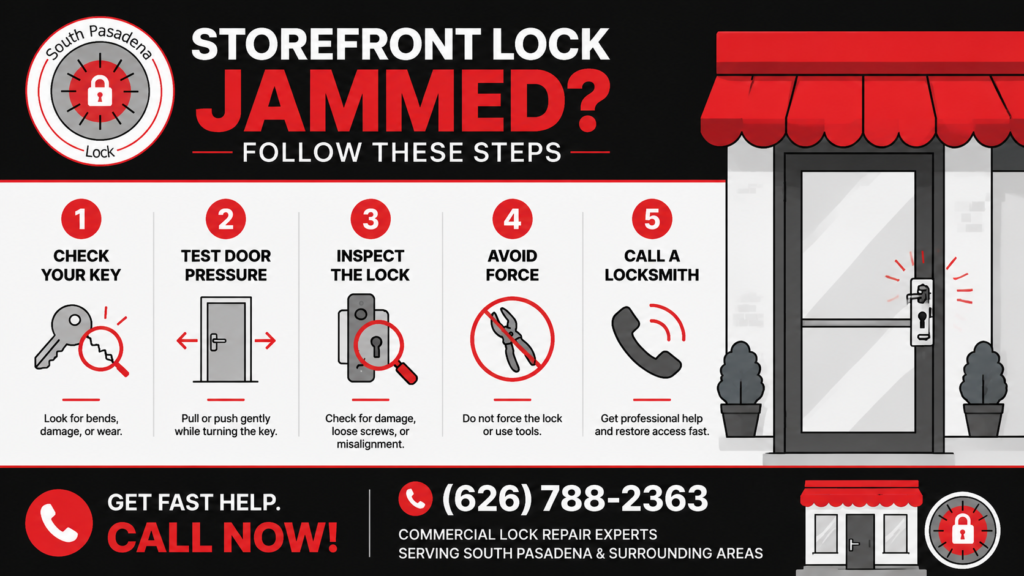
1. Check the Key
Start with the simplest possibility. Try:
- Using a spare key
- Checking for bends or damage
- Confirming you are using the correct key
Do not force a key that will not turn. A broken key inside the lock can create a more difficult repair.
2. Check Door Pressure
Sometimes the lock works correctly, but pressure on the door prevents it from opening.
You can try:
- Pulling the door slightly toward you while turning the key
- Gently pushing the door while unlocking
However, avoid slamming or forcing the door because this can damage the lock further.
3. Look for Visible Problems
Inspect the area around the lock. Look for:
- Loose screws
- Door alignment issues
- Damage around the cylinder
- Signs of attempted entry
These details can help a locksmith quickly identify the problem.
4. Avoid DIY Lock Repairs
Commercial storefront locks use stronger hardware than many residential locks. Taking apart the mechanism without proper tools can damage expensive components.
Avoid:
- Forcing the key
- Prying the lock
- Drilling into the hardware
- Removing commercial lock parts without experience
If the storefront lock jammed and basic checks do not solve the issue, professional repair is the safer option. Contact South Pasadena Locksmith for a free consultation on your storefront locks.
Can a Jammed Storefront Lock Be Repaired Without Replacing the Door?
Yes, many storefront lock problems can be repaired without replacing the entire door.
A locksmith may repair or adjust:
- Lock cylinders
- Strike plates
- Deadbolts
- Latches
- Door alignment
- Worn hardware
The goal is to restore secure operation while avoiding unnecessary replacement costs.
However, replacement may become necessary when the lock has severe damage, repeated failures, or outdated hardware that no longer provides reliable security.
When Should You Replace a Jammed Storefront Lock
Repair works well when the hardware remains in good condition. Replacement becomes the better option when the lock itself has reached the end of its service life.
Consider replacement if:
- The lock was forced open
- The cylinder is broken
- The hardware has heavy corrosion
- Repairs have not solved the problem
- The lock no longer provides proper security
- You want to upgrade access control
A new commercial lock can provide better reliability and improved security for your business.
How Much Does Storefront Lock Repair Cost?
The cost to repair a storefront lock jammed problem depends on the type of lock, the damage level, and the work required.
Common factors include:
| Service Type | Typical Cost Range |
|---|---|
| Lock adjustment or alignment repair | $75–$150+ |
| Commercial lock repair | $100–$300+ |
| Cylinder repair or replacement | $150–$400+ |
| Full storefront lock replacement | $200–$500+ |
NOTE: Prices vary depending on the hardware, door condition, and service timing. Emergency or after-hours repairs may also affect the final cost.
A locksmith inspection helps determine whether repair or replacement makes the most financial sense.
How To Prevent Future Storefront Lock Problems
Regular maintenance can reduce the chance of another storefront lock jammed situation.
Business owners can help prevent problems by:
- Addressing difficult locks early
- Replacing worn keys
- Checking loose door hardware
- Keeping lock areas clean
- Scheduling commercial lock maintenance
- Avoiding forced key turning
A lock that feels different today may become a complete failure tomorrow.
FAQs About Storefront Lock Problems
Why is my storefront lock hard to turn?
A storefront lock may become difficult to turn because of worn cylinders, debris buildup, damaged keys, or internal lock problems. Door alignment issues can also create extra pressure on the lock.
Can I fix a jammed storefront lock myself?
You can check simple issues like key damage or door pressure, but commercial lock repairs usually require professional tools and experience. Forcing the lock can cause more damage.
Does a jammed storefront lock mean I need a new door?
No. Many jammed storefront locks can be repaired through cylinder service, hardware adjustments, or lock repairs without replacing the entire door.
How long does storefront lock repair take?
The repair time depends on the cause of the problem. Simple adjustments may take less time, while damaged hardware or replacement jobs may require more work.
Should I repair or replace my commercial storefront lock?
Repair is usually best when the hardware still works but needs adjustment. Replacement is better when the lock is damaged, outdated, or no longer provides reliable security.
Restore Your Storefront Access Before Downtime Happens
A storefront lock jammed problem can quickly become a business interruption. Whether the issue comes from worn hardware, misalignment, debris, or damaged components, addressing it early helps protect your employees, customers, and property.
South Pasadena Lock helps businesses restore reliable entry with professional commercial lock repair, lock adjustment, and replacement services. Our technicians can inspect the problem and recommend the right solution without unnecessary work.
Get Your Storefront Lock in South Pasadena Working Again
Do not let a jammed storefront lock keep your business from operating normally. South Pasadena Lock provides professional commercial lock repair to restore secure, smooth access.
Call South Pasadena Lock at (626) 788-2363 today for a Free Estimate and dependable storefront lock service in South Pasadena and nearby areas.
 South Pasadena Locksmith is a locally owned and operated locksmith service company that provide fast and professional locksmith service to the residents of South Pasadena and the near by communities like: Pasadena, Altadena, Glendale, Alhambra, Monterey Park, Rosemead along side many others..