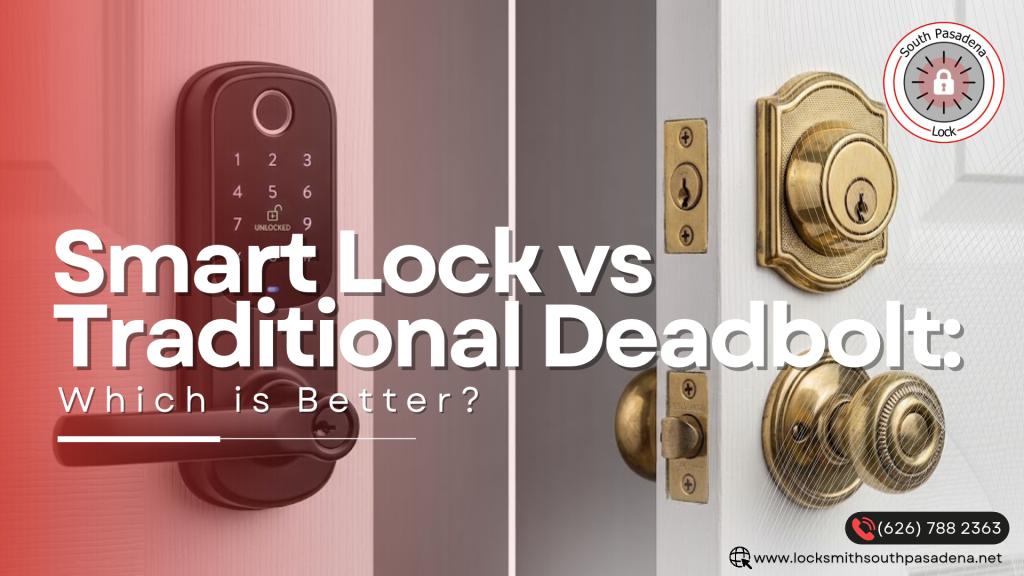
Your front door lock does more than keep the door closed. It controls who can enter your home and how easily you can secure the door when you leave. That is why choosing between a smart lock deadbolt and a traditional deadbolt deserves more thought than simply picking the newest option.
For homeowners in South Pasadena, CA, the right choice depends on how you use your front door, who needs access, and how much convenience you want. Whether you live near Mission Street, the South Pasadena Library, or the neighborhoods around Monterey Road, your lock should fit your home and your daily routine.
Smart Lock Deadbolt vs. Traditional Deadbolt: What Is the Difference?
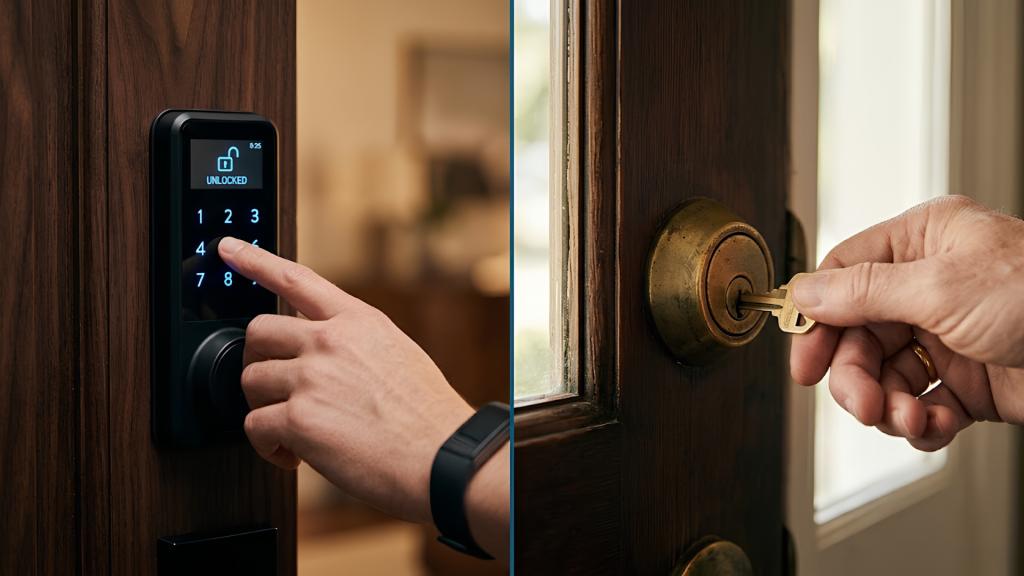
Before comparing the two options, it helps to understand what makes them different. A traditional deadbolt uses a physical key, while a smart lock deadbolt adds electronic access features to the locking system.
With a traditional deadbolt, you insert your key, turn the lock, and move the bolt into the locked position. The process is simple and familiar. In contrast, a smart lock can provide other ways to enter, such as a keypad, smartphone, fingerprint reader, or physical key, depending on the model. Some models can also create temporary access codes for guests or service providers.
The biggest difference is how you control access. Traditional locks rely mainly on physical keys, while smart locks can give you more ways to manage entry.
That difference becomes more important when you think about how you use your front door every day.
When Does a Smart Lock Deadbolt Make Sense?
A smart lock deadbolt can be useful when several people need access to your home or when you want more flexibility than a physical key provides.
For example, imagine your children arrive home before you, a family member needs to stop by, or a cleaner needs access while you are at work. Depending on the model, you may be able to create a code instead of making another key.
A smart lock may make sense if you want:
- Keyless entry
- Individual access codes
- Temporary access for guests
- Smartphone control
- Fewer physical keys
- Automatic locking on compatible models
These features can make everyday entry easier. You may not need to search for your keys when your hands are full, and you can change access without collecting physical keys from everyone.
However, convenience is only one part of the decision. You should also consider whether you actually need these features and how much maintenance you are comfortable handling.
When Is a Traditional Deadbolt the Better Fit?
A traditional deadbolt may be a better fit when you want a simple system that does not depend on electronics. You do not need an app, Wi-Fi connection, or batteries to operate a standard deadbolt lock. You simply use your key.
A traditional deadbolt may suit your home if you:
- Prefer using a physical key
- Want fewer electronic components
- Do not need remote access
- Want a straightforward locking system
- Prefer simple key replacement or rekeying
This option can work especially well for homeowners who already have a reliable deadbolt and do not need additional access features.
If you recently moved into a South Pasadena home, for example, you can also have the existing deadbolt rekeyed. That changes the lock so previous keys no longer work without requiring a completely different locking system.
Smart Lock Deadbolt vs. Traditional Deadbolt: What Should You Consider?
Once you understand the basic difference between the two lock types, the next step is to compare the things that matter most in everyday home use. Security, convenience, maintenance, installation, and cost can all affect which option makes sense for your household.
Which Lock Gives Your Home Better Security?
Both a smart lock deadbolt and a traditional deadbolt can provide dependable protection when you use quality hardware and install it correctly.
A traditional deadbolt controls access through physical keys. If you lose a key or someone who should no longer have access still has one, you can rekey the lock.
Meanwhile, a smart lock deadbolt can give you additional ways to manage access. Depending on the model, you may create separate codes for family members or temporary access for guests and service providers.
However, the lock itself is only one part of your home’s security. The door, frame, strike plate, and installation also matter.
Which Lock Makes Everyday Entry Easier?
The biggest difference may come down to how you use your front door every day.
A traditional deadbolt keeps things simple. You carry a key, insert it, and turn the lock.
A smart lock deadbolt, on the other hand, can let you unlock the door with a code, smartphone, fingerprint, or another supported method. Some models can also lock automatically.
Think about your routine. Do you regularly carry groceries, have children coming home at different times, or need to give someone temporary access? Keyless entry may make those situations easier.
Which Option Is More Reliable Over Time?
Traditional deadbolts have fewer components to manage. They do not need batteries, an app, or an internet connection to operate.
Smart locks require power, so battery life becomes something you need to consider. Before choosing a smart lock deadbolt, check how the model handles a low or dead battery and what backup entry method it provides.
That does not mean one type will always work better than the other. Both can become unreliable when their hardware wears out or when the lock does not fit the door correctly.
What Maintenance Does Each Front Door Lock Need?
Every lock needs some attention over time. Traditional deadbolts can develop worn cylinders, loose hardware, or sticking bolts.
If your existing deadbolt has one of these problems, deadbolt lock repair may restore proper operation without requiring a complete replacement.
Smart locks can also develop hardware problems, while their electronic components add battery maintenance to your routine. Keeping the battery fresh and following the manufacturer’s maintenance instructions can help prevent avoidable access problems.
Does Installation Affect How Well the Lock Works?
Whichever option you choose, installation matters. A new lock will not work properly if the bolt does not line up with the strike plate or the door frame has damage.
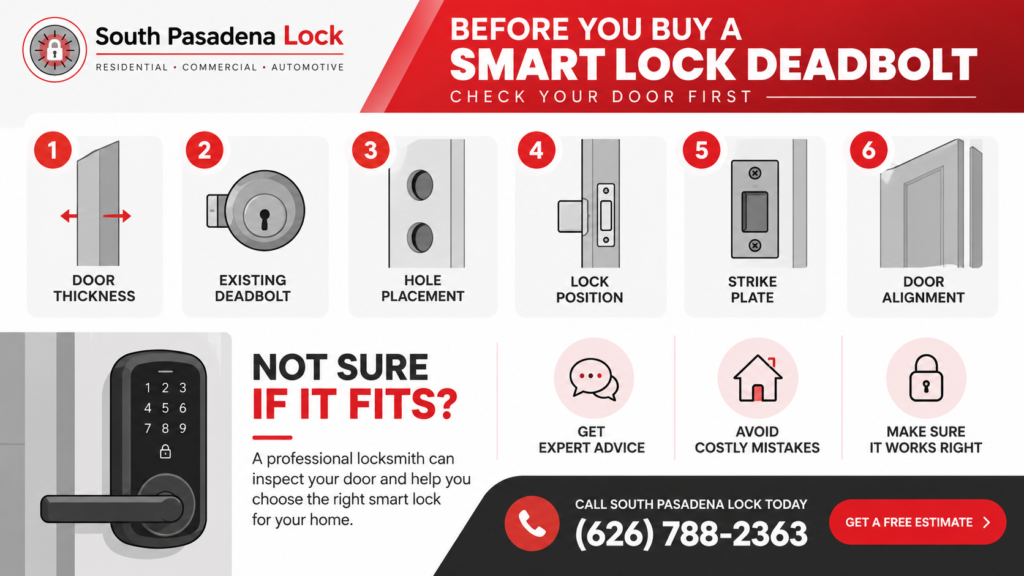
Before installing a smart lock deadbolt, check the door thickness, existing deadbolt setup, hole placement, and available space around the hardware.
The same applies to deadbolt lock installation. If your door already sticks or sits unevenly, fix the underlying alignment problem instead of expecting a new lock to solve it.
Professional smart lock installation can also help ensure the new hardware fits the door and operates smoothly.
How Much Does Each Lock Cost?
The purchase price is only part of the cost. Installation, repairs, rekeying, batteries, and other hardware can affect what you spend over time.
A traditional deadbolt generally has a lower upfront hardware cost and does not require batteries. A smart lock deadbolt often costs more because it includes electronic access features.
Ask yourself whether you will actually use those features. If keyless entry and flexible access would make your daily routine easier, the additional cost may be worthwhile. If you simply want a dependable lock that works with a physical key, a traditional deadbolt may give you everything you need.
Can a Smart Lock Fit Your Existing Door?
After comparing the features, you may already know which option interests you more. Before purchasing anything, however, take a look at your existing door.
Not every smart lock deadbolt fits every door. Check the:
- Door thickness
- Existing deadbolt style
- Hole placement
- Lock position
- Space around the hardware
The condition of the door matters too. If the door sits unevenly or the strike plate has shifted, a new lock may not solve the underlying problem.
That is why proper smart lock installation starts with checking the door itself.
How Do You Choose the Right Deadbolt for Your Home?
At this point, the decision comes down to how you want to use your front door.
A traditional deadbolt may fit your needs if you want:
- Simple key-based access
- No battery maintenance
- A familiar locking system
- Easy rekeying when needed
A smart lock deadbolt may fit your needs if you want:
- Keyless entry
- Flexible access for family members
- Temporary access codes
- Smartphone features
- Fewer physical keys
Think about your actual routine. Do several people use the door? Do you regularly give someone temporary access? Would you rather carry a key or enter a code?
Your answers can help you choose the right lock without paying for features your household doesn’t need. For expert guidance on the best option for your home, contact South Pasadena Lock today to book your service.
Upgrade Your Front Door With South Pasadena Lock
Is your current deadbolt difficult to use, outdated, or no longer giving you the access options you want? South Pasadena Lock can inspect your existing door and help you understand your options.
Whether you need smart lock installation, deadbolt lock repair, rekeying, or a new smart lock deadbolt, our residential locksmith team can help you choose a practical solution for your home.
Call South Pasadena Lock at (626) 788-2363 today for a Free Estimate and upgrade your front door with confidence.
 South Pasadena Locksmith is a locally owned and operated locksmith service company that provide fast and professional locksmith service to the residents of South Pasadena and the near by communities like: Pasadena, Altadena, Glendale, Alhambra, Monterey Park, Rosemead along side many others..