Leaving home for a trip should feel exciting, not like you are worrying about what you left behind. Yet once the bags are packed, many homeowners start thinking about cash, jewelry, passports, important documents, and other valuables sitting inside the house. What happens if someone finds them while you are away? A few simple steps can make those items much harder to access. Good travel safe storage starts with deciding what needs extra protection, choosing the right place to store it, and securing your home before you leave.
For homeowners in South Pasadena, CA, that can be especially helpful before a longer vacation or weekend away. Whether you live near Mission Street, South Pasadena Village, or the neighborhoods around Arroyo Seco, a little preparation can give you one less thing to worry about while traveling.
What Should You Secure Before You Travel?
Before choosing a storage method, take a few minutes to identify the items you would not want to lose. You may have more valuables around the house than you realize.
Start with items such as:
- Cash and gift cards
- Jewelry and watches
- Passports and identification
- Birth certificates and other important records
- Spare keys
- Financial documents
- Small electronics
- Family heirlooms
- Sensitive business or personal documents
You do not necessarily need to lock away every valuable item you own. Instead, focus on anything that would create a major financial, personal, or practical problem if it disappeared.
Once you know what needs protection, you can choose the storage method that makes the most sense.
Travel Safe Storage: Choose the Right Place
Where you store your valuables matters almost as much as the container you use. Leaving jewelry in a bedroom drawer or important documents on a desk makes them easy to find.
A home safe can create a dedicated place for valuables. Depending on the type of safe and your home’s layout, you might choose a compact safe, a larger home safe, or a floor safe designed for a more discreet installation.
Use a Home Safe for Everyday Valuables
A home safe can provide a convenient place to store smaller valuables when you are away. It also gives your household one consistent location for important items.
If you already own a safe, check that the lock works properly before your trip. You do not want to discover that the keypad has stopped responding when your flight leaves the next morning.
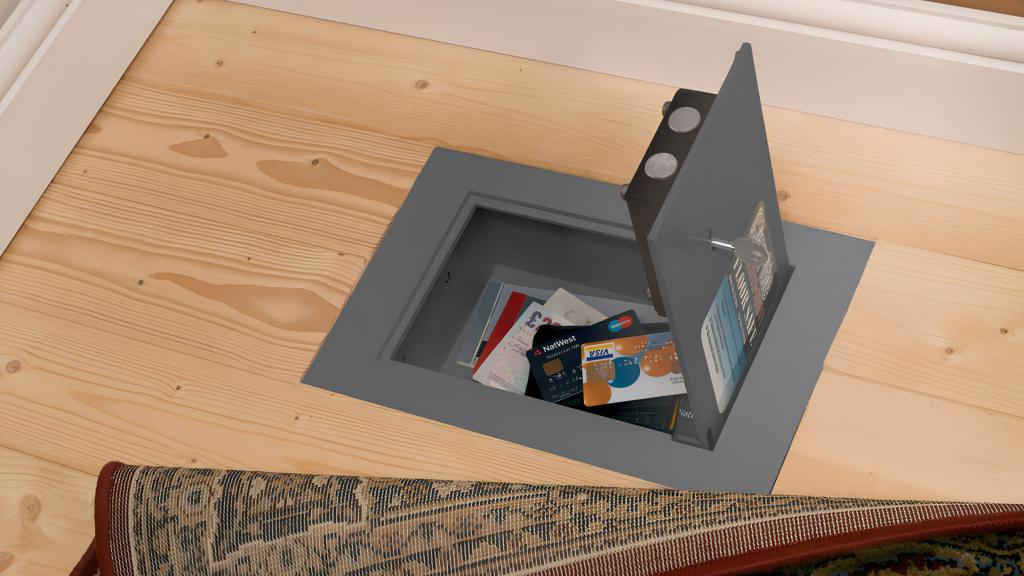
Consider a Floor Safe for Less Visible Storage
A floor safe can offer another storage option when you want the safe itself to remain less noticeable. Professional installation can help position and secure the safe appropriately within the property.
Homeowners should consider the structure of the home and the safe manufacturer’s requirements before choosing this option. A safe locksmith can also help determine whether an existing safe or installation setup needs attention.
How Can You Make Travel Safe Storage More Secure?
A safe adds an extra layer of protection, but it should not be the only thing you secure before leaving home. Before your trip, take a few minutes to check the safe, the access information, and the rest of your property.
- Make sure your safe locks properly. Test the keypad, combination, or key before you leave. If the lock feels stiff or does not work normally, address the problem before your trip.
- Keep your safe access information private. Do not leave the key, combination, or access instructions somewhere easy to find. Avoid writing the combination on a note beside the safe.
- Secure the room where you keep the safe. Keep the area around the safe tidy and avoid leaving other valuables or important documents in plain sight.
- Check your home’s main entry points. Lock exterior doors and windows before you leave. Check your garage and any secondary entrances as well.
- Remove predictable spare keys. Avoid leaving spare keys under doormats, inside planters, or in other obvious locations.
These simple steps work together. When you secure both your valuables and the home around them, you create a stronger travel safe storage plan and can leave with greater peace of mind.
Travel Safe Storage: What Should You Avoid?
Some common hiding spots may feel convenient, but they can make valuables easier to find. Before you leave for a trip, take a quick look around your home and move anything important out of predictable locations.
- Do not leave jewelry in a bedside table or dresser. These are common places to look for valuables, so they are not ideal for storing expensive jewelry while you are away.
- Do not leave cash or passports in an unlocked home office. Important documents and money can be easy to identify if someone enters the room.
- Avoid hiding valuables under the mattress. This may seem like a private spot, but it is one of the first places people may check.
- Skip predictable drawers and closets. A sock drawer, clothing drawer, or space behind clothes does not provide much protection for valuable items.
- Use a dedicated storage solution instead. A properly secured home safe can give you better control over access and provide a more appropriate place for cash, jewelry, documents, and other valuables.
A few minutes of preparation can make your travel safe storage plan much stronger. Before you leave, ask yourself whether someone unfamiliar with your home could easily guess where you keep your most important belongings.
Check Your Safe Before Leaving Home
If you plan to rely on your safe for travel safe storage, test it several days before your trip. You do not want to discover a problem with the lock when you are already packing your bags or heading to the airport.
Before leaving, run through these quick checks:
- Open and lock the safe. Use your combination, key, or normal access method. Make sure the safe opens and locks without unusual resistance.
- Test the keypad if your safe has one. Make sure it responds normally when you enter your code. If the keypad uses batteries, check their condition and follow the manufacturer’s instructions for replacement.
- Check the handle or dial. Pay attention to anything that feels different from normal. A stiff handle, difficult dial, or lock that does not respond properly can signal a problem.
- Confirm your access information. Make sure you know the correct combination and have the proper key if your safe uses one. Keep this information secure rather than leaving it beside the safe.
- Deal with problems before your trip. If the safe does not operate normally, do not force the lock. A professional safe repair may resolve the issue before you leave.
Taking a few minutes to test your safe can prevent an avoidable problem from disrupting your travel plans.
What If Your Safe Will Not Open Before a Trip?
Testing your safe before a trip can help you catch problems early. But what happens if you discover that the safe will not open? First, do not force the handle, keypad, or dial. You could turn a simple lock problem into a more expensive repair.
Instead, take a moment to identify what changed:
- Check the keypad. If the keypad does not respond, the batteries or electronic components may need attention.
- Check the battery. If your safe uses an electronic lock, make sure the battery has not run low. Follow the manufacturer’s instructions rather than forcing the keypad.
- Try your normal access method. If you use a key or combination, make sure you are using the correct one and notice whether the lock feels different than usual.
- Look for signs of damage. A recent impact or other physical damage may affect the locking mechanism.
- Do not force the safe open. If the problem continues, contact a professional safe locksmith. A broken safe keypad, mechanical lock problem, or other issue may require safe lock repair or a replacement component.
Getting the problem checked before your trip can help restore access without creating unnecessary damage or turning a small issue into a larger repair.
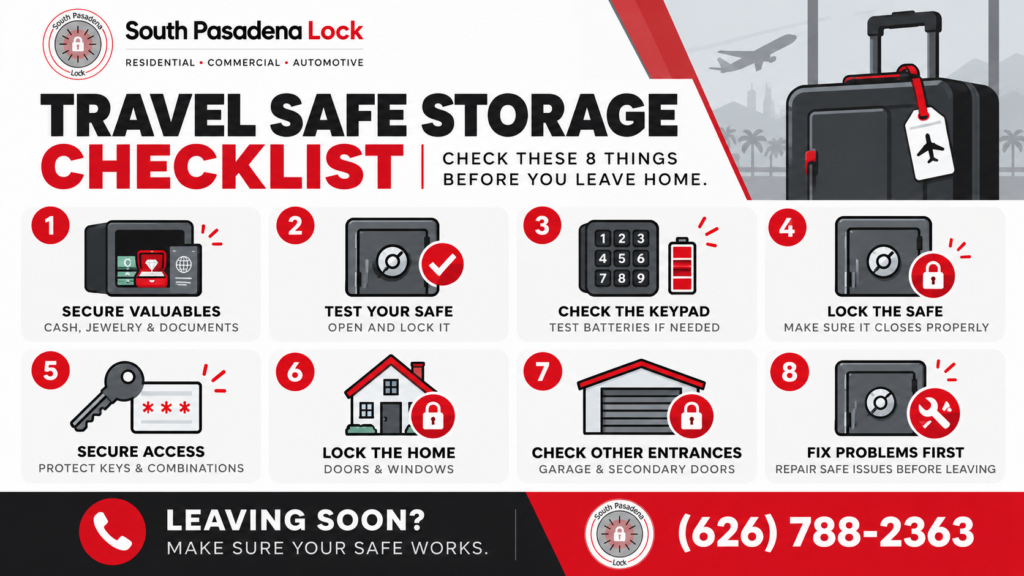
Before you leave, take a few minutes to run through this quick travel safe storage checklist and make sure your valuables and home are ready.
When Should You Call a Safe Locksmith?
Sometimes preparation reveals a problem that you cannot solve yourself. Perhaps the keypad no longer responds, the safe will not unlock, or the locking mechanism feels different than it did before. That is when professional residential locksmith services can help.
A safe locksmith can assess the lock, identify the problem, and explain whether you need safe repair, a replacement component, or another solution. If you are planning a new safe installation, professional guidance can also help you choose a setup that fits your home and storage needs.
If you want to understand what may affect the price before scheduling service, our guide on safe repair cost in South Pasadena explains the common repair issues and factors that can change the final cost.
Handling the problem before your trip gives you one less thing to worry about. More importantly, it helps ensure your safe is ready to protect your valuables while you are away.
Protect Your Valuables Before Your Next Trip
Do not wait until the morning of your trip to find out that your safe keypad has stopped working or your lock will not open.
If your safe is locked, damaged, or not working properly, South Pasadena Lock can help restore access before you leave. Our team provides safe repair, safe-related locksmith services, and assistance with safe installation for homeowners in South Pasadena and nearby communities.
Contact South Pasadena Lock at (626) 788-2363 if you need a safe opened or repaired before your next trip.
 South Pasadena Locksmith is a locally owned and operated locksmith service company that provide fast and professional locksmith service to the residents of South Pasadena and the near by communities like: Pasadena, Altadena, Glendale, Alhambra, Monterey Park, Rosemead along side many others..